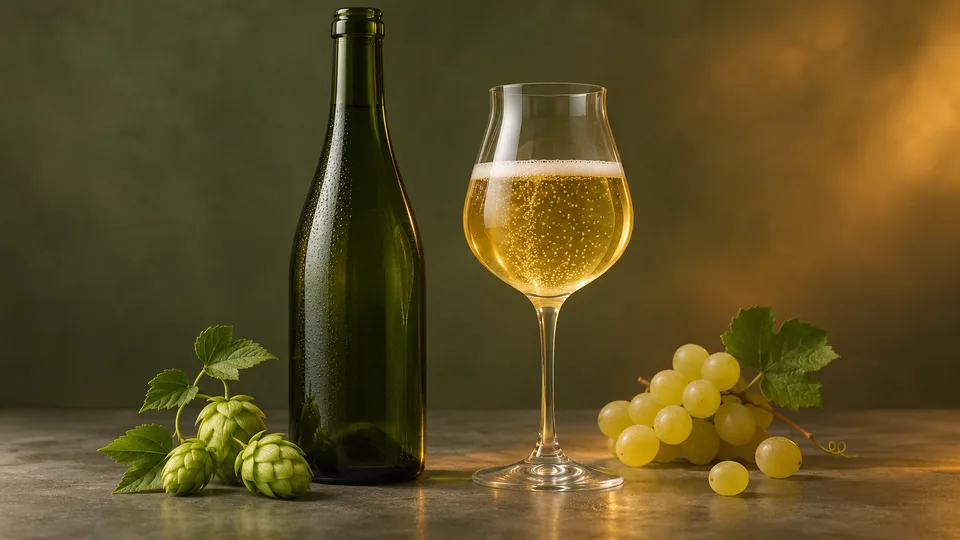
A beer-flavoured wine concept starts with a wine base and a sensory brief inspired by beer. For beverage brands in India, the early decisions are how much wine character to retain, which beer-like notes to express, and how the finished drink can be classified and launched.
Define what “beer-flavoured” means for your drink
Decide what a customer should notice first. A wine-led drink with a light hop aroma will taste different from a golden sparkling drink with a more pronounced malty note or dry, bitter finish. Choose a reference wine for the base character and a reference beer for the specific aroma, flavour or finish you want to evoke. State whether the finished drink should be still or sparkling.
Check the product category before naming it
Use “beer-flavoured wine” as a working concept during development. FSSAI’s alcoholic beverage regulations set out separate standards for beer, wine and wine-based beverages. Ask a qualified adviser to review the actual composition, alcohol source, intended flavourings and carbonation before approving a product name or label. If the concept contains actual beer or another source of alcohol, flag that early. Review excise requirements for the intended production and sales states separately.
Could wine classification lower the tax cost?
It can, where the finished product qualifies for a lower state rate or a specific wine concession. A lower excise cost per bottle can help a brand meet its retail price target or retain more margin. Compare the full cost per bottle before relying on that advantage.
Alcoholic liquor for human consumption is outside GST on the sale of the finished drink. For an Indian launch, check the applicable state excise duty, VAT and fees. Tax treatment can depend on the product category, production or sourcing route, and where the drink will be sold. CBIC constitutional amendment text
Maharashtra example
Maharashtra State Excise’s published revised duty and MRP table illustrates how different the treatment can be between categories. Maharashtra revised duty and MRP table
| Category in the published table | Excise and VAT shown |
|---|---|
| Wine made from grapes grown in Maharashtra, with no added alcohol or outside wine blended in | ₹10 excise per bulk litre through 31 December 2026. The MRP formula shows 20% VAT. |
| Wine made from fruit other than grapes | Excise at 100% of manufacturing cost. The MRP formula shows 20% VAT. |
| Mild beer below 5% ABV | Excise at the higher of 175% of manufacturing cost or ₹42 per bulk litre. The MRP formula shows 40% VAT. |
Worked example. At ₹10 per bulk litre, the excise component alone is ₹3.30 for a 330 mL bottle in the qualifying Maharashtra grape-wine category. VAT and any applicable fees are separate.
Beer-like flavour alone does not establish eligibility for the wine concession. Verify the finished drink’s excise classification and the latest schedule for the relevant states and sale date. Include VAT, brand or label registration fees, permits and transport charges where applicable. Maharashtra State Excise rate notices
Compare prototypes at the same serving temperature
Ask tasters to describe the wine character, beer-like aroma, bitterness and finish. If fizz is part of the brief, judge it independently from the flavour. Compare samples without revealing their development details and record which profile feels most coherent. An aroma that gets attention in the first sip may become too dominant over a full glass.
Match the pack and manufacturing partner to the concept
Confirm whether the proposed partner can handle the product category, chosen package and carbonation requirements. Ask about closures, trial runs, minimum orders, packaging supply and quality checks. Plan shelf-life evaluation for the proposed commercial pack and storage conditions before committing to a large first run.
Product brief and first-run worksheet
| Decision | What to record |
|---|---|
| Wine character | Dry or fruit-forward, with a clear reference sample |
| Beer-inspired notes | Hop aroma, malty character or bitterness, with a target intensity |
| Format and pack | Still or sparkling, preferred pack, serving size and storage route |
| Illustrative first run | 6,000 bottles × 330 mL = 1,980 L of finished beverage before production allowances |
| Decisions before printing | Product category, approved name, ingredient and label review, and relevant state requirements |
The fill volume is an example for planning, with no assumed production losses. Confirm your quantities with the manufacturing partner.
What to send BCS
Share your flavour references, preferred wine style, proposed pack, launch states and first-run estimate. BCS can help scope formulation and a contract manufacturing tie-up for the project.