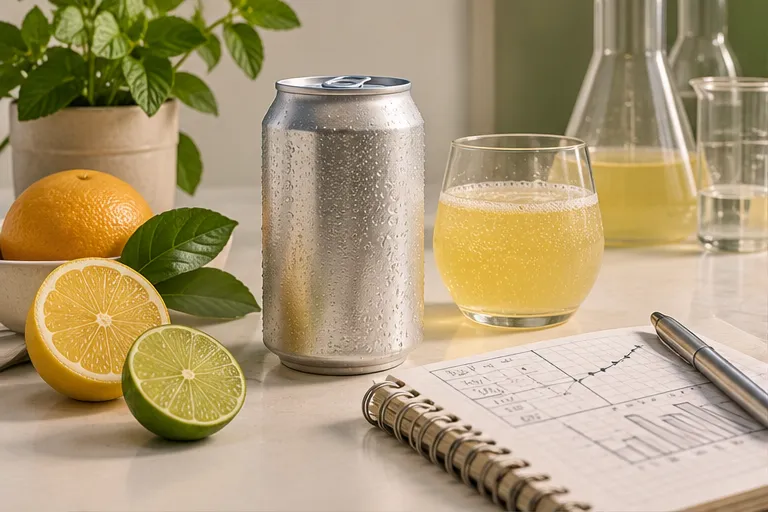
A useful beverage formulation brief describes a product someone can picture buying. “Create a refreshing functional drink” leaves too much open. “A lightly sparkling citrus drink in a single-serve can for afternoon consumption” gives the team a clearer starting point for flavour, pack and positioning conversations.
Define the customer and the occasion
Describe who will buy the drink, when they’ll reach for it and where they’ll find it. Share two or three reference products, along with specific likes and dislikes. “Less sweet than this sample, with a cleaner finish” is more actionable than “premium taste.”
Give the recipe team commercial guardrails
Include planned pack size, target retail price, sales channel and any ingredient exclusions. Where possible, distinguish the retail price from the amount you can spend on the beverage and pack. A recipe shortlist is easier to assess when all samples work toward the same commercial goal.
Decide how you will approve a sample
Agree on the flavour profile, appearance and drinking experience you want to achieve. Record feedback by sample version so the team can track what improved. Share whether production will be outsourced or run on your own line, even if the decision is provisional.
Formulation brief template
| Example field | What to record |
|---|---|
| Product and buyer | Lightly sparkling citrus drink for an afternoon purchase at a convenience store |
| Pack and volume | 250 mL can × 12,000 units = 3,000 L of finished product before production losses |
| Taste reference | Record the reference drink and the specific change you want in sweetness, aroma or finish |
| Sample approval | Log the sample code, decision, reviewer and approved changes |
Illustrative product brief. Replace the format and volumes with your own.
What to send BCS
Bring a one-page brief, reference products and an estimate of your initial volume. If you already have a prototype, say which parts must stay and which can change.